
The short answer
After hail, check from the ground first: fresh dents or spatter marks on gutters, downspouts and the AC unit mean the roof took hits too. Then have a roofer you trust inspect it, photograph everything, and call your insurer if the damage looks much larger than your deductible. Don't sign with anyone who knocks unasked.
How do I know if hail damaged my roof?
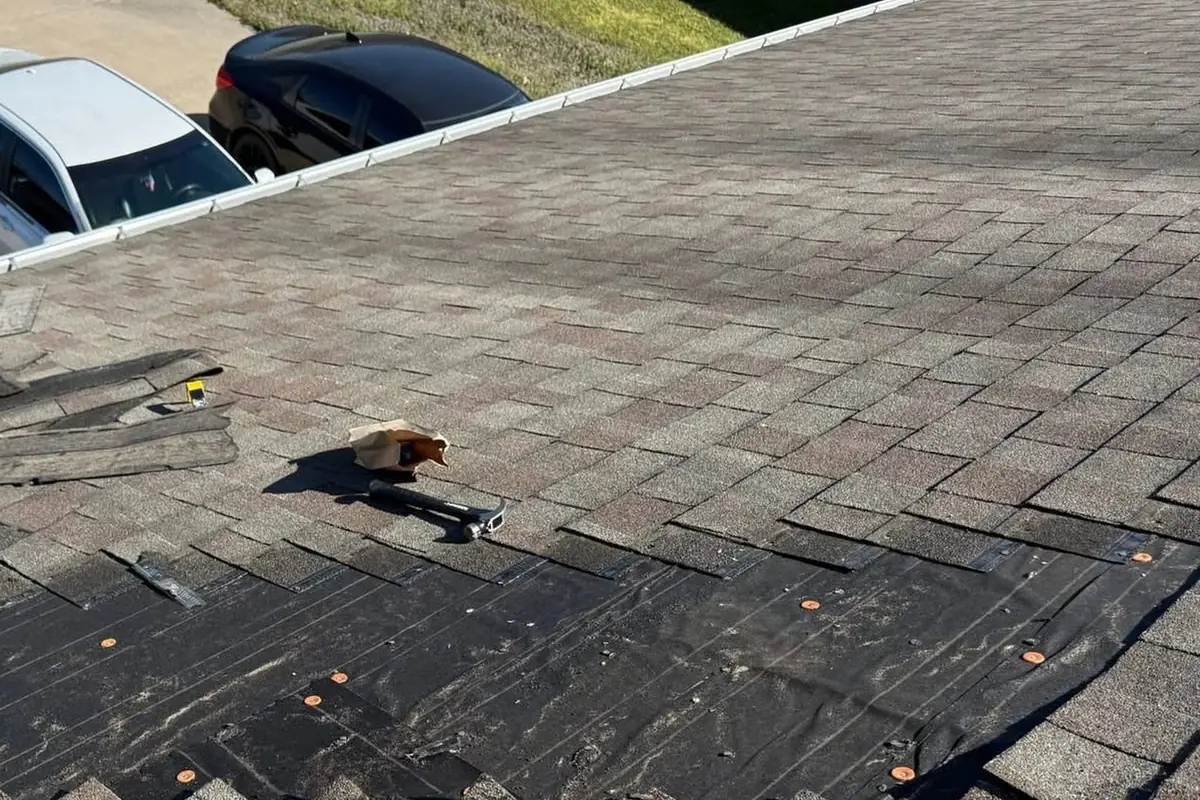
Start on the ground, not on a ladder. The Insurance Institute for Business and Home Safety's guide to spotting hail damage says spatter marks or dents on air conditioning units, gutters, metal flashing, downspouts and patio furniture confirm a hail event happened. If the soft metal around your house is dented, the roof was hit by the same stones.
On the roof itself, IBHS lists these signs on asphalt shingles:
- Impact marks scattered at random across the shingles, not bunched in one spot
- Bruises: soft spots that give when you press on the shingle
- Cracks or breaks where a stone struck
- Damage to the ridge caps, which IBHS calls especially vulnerable
IBHS also lists what isn't hail damage, and it's worth knowing so nobody talks you into a claim that gets denied: granule loss along shingle edges from normal weathering, wear or discoloration that's even across the roof, manufacturer defects, marks from tools or installation, and granules washed loose by heavy rain.
What size hail damages a roof?
About an inch and up, for most shingle roofs. A 2013 article in Interface, the journal of the roofing consultants' institute IIBEC, published the smallest hail sizes that typically damage common roofs, drawn from more than 45 years of lab testing with simulated hail and tens of thousands of field inspections by insurers and independent assessors:
| Roof | Smallest hail that typically damages it |
|---|---|
| 3-tab asphalt shingles | 1 inch |
| Architectural (laminated) asphalt shingles | 1¼ inches |
| Wood shingles | 1¼ inches |
Source: IIBEC Interface, February 2013, citing Haag Engineering's field guide.
For scale, the Storm Prediction Center's definition of a severe thunderstorm starts at hail 1 inch across, about the size of a quarter. The article's sizes assume hard hail hitting straight on and a roof in reasonable shape, and it names valleys, the edges of shingle tabs and the overlaps as the most vulnerable spots. A worn roof falls outside those assumptions, so treat the numbers as a guide, not a rule. Smaller hail can still dent gutters and screens without hurting a sound roof, which is why a close look beats a guess.
Impact-rated roofs are tested with bigger stones. Our post on Class 4 shingles explains the test, and the one on metal roof costs covers how metal handles hail.
How to check if hail hit your street, and when
Your insurer will ask for the date of loss, the day the storm hit. If you aren't sure, the federal Storm Prediction Center keeps daily storm reports going back to June 1, 1999. You can pull up any date and see each hail report with its time, the size of the hail, the town and county, and notes on any damage. Sizes are written in hundredths of an inch, so 175 means 1.75 inches.
Look up the dates you remember storms and check for reports near your house in Sebastian, Crawford, Benton or Washington County, or in Le Flore or Sequoyah County across the line in Oklahoma. A report a few miles away doesn't prove your roof was hit, and the absence of one doesn't prove it wasn't, since the reports come from people who saw the hail and reported it. But a report near you with a size of an inch or more on the date you give is useful backup for a claim.
Neighbors help too. When several houses on a street get roofers, adjusters and dumpsters in the same few weeks, that's a good sign the storm was bad enough to look closely. Write down the date and save a screenshot of the report with your photos.
What to do in the first days after a hailstorm
The Arkansas Insurance Department's post-storm tips lay out the order. In plain terms:
- Make sure everyone is safe, then call your insurance agent. Ask what forms, documents and information they'll need.
- Photograph or video the damage: the roof from the ground, dented gutters and vents, the AC unit, and any leaks inside.
- Don't throw damaged things away unless your insurer tells you to.
- Stop more damage. Cover holes and leaking spots; IBHS suggests a tarp over exposed areas.
- Save every receipt, including for tarps and other temporary repairs, since those may be covered.
- Don't have permanent repairs made until your insurer has inspected and you've agreed on the cost.
- If the house isn't livable, ask whether your policy pays living expenses while it's repaired.
The department also says insurers will honor their policies, so there's no need to rush into an agreement with a contractor who shows up unasked. Take the time to get the roof looked at by someone you chose.
If water is coming in, call a roofer for a tarp first and sort out the rest after. Ramos Roofing Plus runs a 24/7 emergency line at (479) 652-1424 for emergency tarping.
Should you file an insurance claim for hail damage?
The Insurance Department's rule of thumb is simple. Have the roof inspected by a trusted roofer first. If the damage is below your deductible, you pay for the repair yourself. If it's much larger than your deductible, turn the claim in.
Know your deductible before you call. Many policies have a separate wind and hail deductible, and it can be a flat amount or a percentage of your home's insured value; the insurer Openly's guide to wind and hail deductibles gives 1, 2 or 5 percent as examples. On a home insured for $250,000, a 2 percent deductible is $5,000. A few dented vents won't reach that. A roof full of bruised shingles often will.
How the roof is paid also depends on the policy. Replacement cost pays today's price to replace it; actual cash value takes off an amount for age and wear first. Some insurers pay only the actual cash value until you show the roof was replaced, and the Arkansas Insurance Department warns that those policies require the work to be finished within six months of the date of loss to collect what was held back.
One worry you can drop: Arkansas law (Ark. Code § 23-63-110, cited in the department's Bulletin 19A-2020) says an insurer can't cancel your policy or raise your premium solely because of claims that resulted in no loss to the insurer.
Is there a deadline to file a hail claim in Arkansas?
Yes, and it's longer than most people fear but not open-ended. Many policies ask for wind and hail claims within 365 days. In Bulletin 19A-2020, the Arkansas Insurance Department says a claim reported more than 365 days after the date of loss can be denied under that policy language, but the homeowner must get the chance to show good cause for the delay, such as damage nobody could reasonably have spotted. The department considers claims reported more than 24 months after the date of loss to be reasonably denied.
The department is clear that this doesn't release homeowners from reporting losses in a timely way. So the practical answer is: don't wait. If a storm came through and you aren't sure about the roof, get it inspected while the date is fresh and the evidence is still on the gutters.
In Oklahoma, check your policy's own reporting window, and ask your agent if you're unsure.
How to spot a storm chaser after a hailstorm
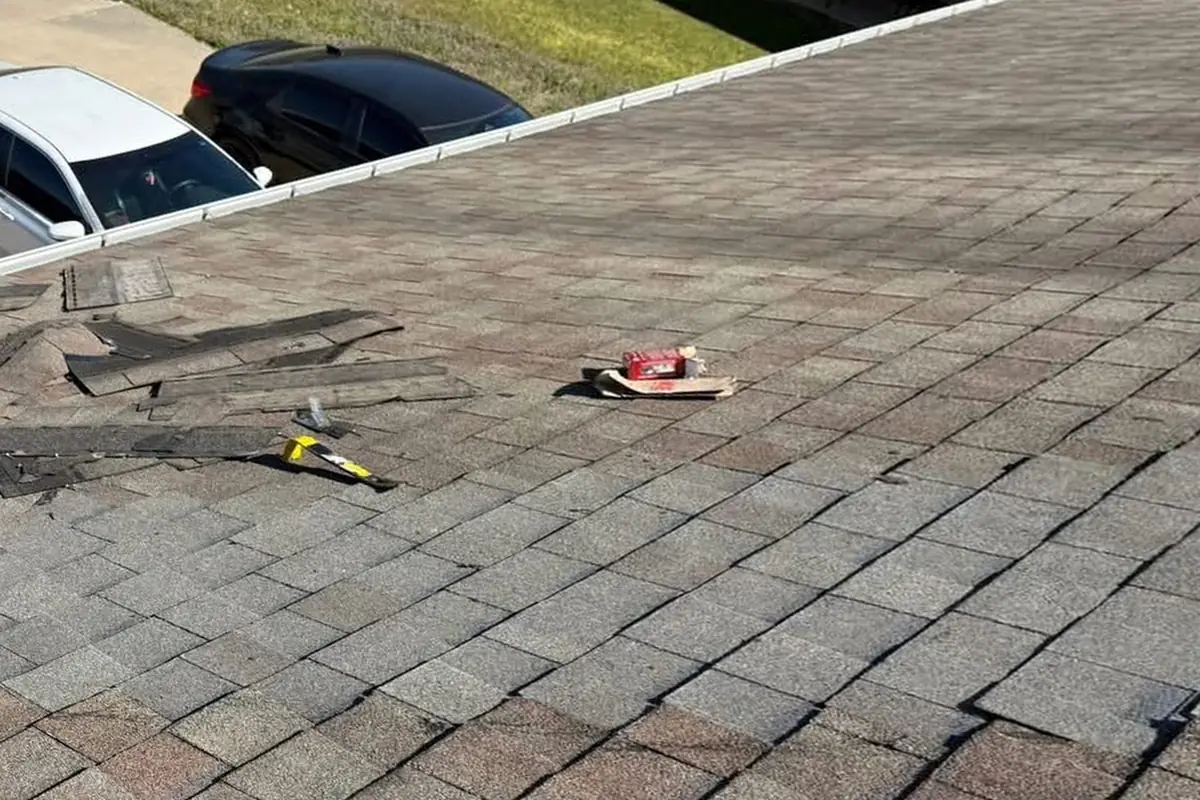
After a hailstorm, expect crews you've never heard of knocking on doors. The trouble with hiring one on the spot is that they may be hard to reach when something goes wrong later. The Arkansas Attorney General's post-storm consumer alert and the Insurance Department give the same warnings:
- Get more than one estimate, and check references.
- Never let a contractor pressure you into hiring them on the spot.
- Never sign a contract with blanks to be filled in later.
- Never pay in full before the work is finished.
- Never let a contractor talk you out of calling your insurance company.
- Avoid anyone who offers to waive your deductible or promises a rebate.
- Check the contractor's license with the Arkansas Contractors Licensing Board and ask for proof of liability insurance.
The Attorney General's office takes complaints at (800) 482-8982 and the Insurance Department's consumer line is (800) 852-5494.
Ramos Roofing Plus is a family business based in Fort Smith since 2000, and we work with all the major insurance companies. If you'd like a second opinion on a storm roofer's findings, we do storm damage assessments and hail damage roof repair across Fort Smith, Northwest Arkansas and eastern Oklahoma.
About Ramos Roofing Plus
Ramos Roofing Plus is a second-generation, family-owned roofing and siding company in Fort Smith, Arkansas, in business since 2000. We put on shingle, metal and TPO roofs and siding across Northwest Arkansas, the Arkansas River Valley and eastern Oklahoma, and back new roofs with a 5 to 10 year workmanship warranty. More about us.